
El Condor Pasa Guitar Tab
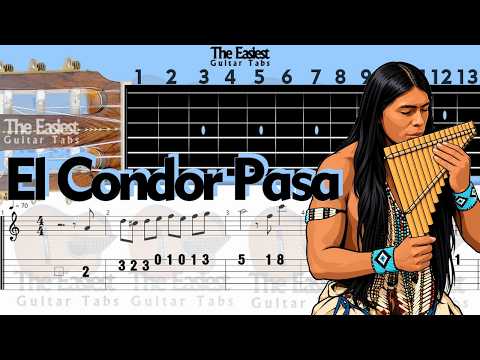
"El Cóndor Pasa" is a famous traditional Peruvian melody composed by Daniel Alomía Robles in 1913. Inspired by the folk music of the Andes, the piece is known for its beautiful, flowing melody and emotional atmosphere. Its musical character evokes the vast mountain landscapes of South America, capturing a sense of freedom, nostalgia, and connection with nature.
The music features traditional Andean instruments, particularly the pan flute and charango, creating a distinctive sound filled with warmth and cultural charm. Its memorable melodic phrases and gentle rhythms have made it internationally recognizable, especially through the popular version by Simon & Garfunkel. "El Cóndor Pasa" remains one of the most beloved and recognizable melodies associated with South American folk music.
PDF file availability: available
Open PDF viewerEl Condor Pasa Guitar Tab Video
How to Read a Guitar Tab
In music, a tablature is a symbolic form of musical notation adapted to a specific instrument, intended to be read and performed more easily than a traditional musical score.
To put it simply, a tablature represents the guitar neck and indicates which notes to play and when.
In guitar tabs, the lines represent the six strings of the guitar, and the numbers on the lines indicate which frets to press with your fingers.
Why Learn to Read Guitar Tablature?
Tablatures are especially useful for learning the guitar without needing to understand traditional music theory.
Additionally, almost all modern songs are transcribed into guitar tablature. If you want to learn your favorite songs, knowing how to read guitar tabs is essential.
The Basic Principles of Reading Tablature
- A tablature always represents the lower notes at the bottom.
- It is important to know the names of the strings (E, A, D, G, B, E).
- Numbers indicate which fret to place your finger on.
- A "0" means an open string, which is played without pressing on any fret.
- Tabs are read from left to right.


